
Paycheck to Paycheck to Savings in 30 Days:
The Exact System That Turned My Financial Anxiety Into Automatic Momentum
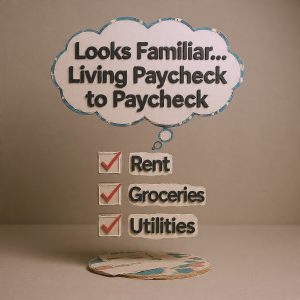
For a long time, living paycheck to paycheck felt normal to me. Not dramatic panic—just a constant, low-level tension that never shut off. I’d open my banking app with one eye half-closed. I’d do mental math in the grocery store, and tell myself, Next month I’ll finally save.
Next month never came.
What finally changed things wasn’t more income or some extreme budgeting challenge. It was realizing that my money wasn’t broken—I was just running it through a system that guaranteed I’d stay stuck. Once I changed the system, everything else followed. And within 30 days, I had savings for the first time that actually felt real.
Why I Stayed Paycheck to Paycheck (Even When I Tried to Save)
The paycheck-to-paycheck loop I couldn’t see

I used to think I was bad with money. Looking back, I wasn’t reckless—I was trapped in timing.
My paycheck arrived on schedule. My expenses didn’t. Rent came out in one chunk. Groceries, gas, random charges, and subscriptions leaked out slowly. By the time I thought about saving, there was nothing left to work with.
Every month followed the same rhythm:
Paycheck hits → bills disappear → life happens → anxiety rises → savings get postponed.
I didn’t fail at saving. Saving never had a chance.
Why budgeting kept falling apart for me
I tried budgeting more times than I can count. Apps, spreadsheets, notebooks—you name it. They all worked great… for about a week.
Then real life would show up. I’d get tired. I’d forget to track something. One “off” day would turn into a full reset, and eventually I’d quit altogether. It felt like proof that I lacked discipline.
What I didn’t understand then was that most budgets assume you’ll always have energy, focus, and emotional bandwidth. I didn’t—and neither does anyone else.
The money mistakes I didn’t know I was making
The biggest problems weren’t obvious. They were psychological.
I prioritized immediate relief over future security. I treated unexpected money as spending money. And saving felt like losing access to cash—even though that “access” never actually made me feel safe.
Once I saw those patterns, things started to click.
The 30-Day Savings Shift (What Changed First)
The moment I stopped saving “what was left.”
Everything shifted the day I stopped treating savings as optional.
Instead of waiting to see if I could save, I decided how much I’d protect first—even if it was small. That amount moved automatically, right after my paycheck hit.
I didn’t have to think about it. I didn’t have to “be good.” The money just moved.
How savings stopped feeling like punishment
Before, saving felt like a restriction. Like I was constantly saying no.
This time, I said yes once—and let the system do the rest. I wasn’t cutting my life apart, and I wasn’t tracking every dollar. I was just redirecting money quietly, consistently.
For the first time, saving didn’t feel emotional. It felt neutral. And that made it sustainable.
Why the 30-day window mattered
Thirty days felt safe. Not forever. Not overwhelming. Just long enough to prove something to myself.
Every small win calmed my nerves. Every balance check made me trust the process more. Somewhere along the way, I stopped thinking of myself as “bad with money” and started thinking, I’m someone who saves.
That identity shift mattered more than the number.
Week-by-Week: How I Went From $0 to My First Savings Buffer

Days 1–7: Seeing where my money was actually going
The first week wasn’t about cutting everything. It was about honesty.
I looked at patterns instead of details. Where my money consistently went. Which expenses added value—and which just quietly drained my account.
I canceled one thing. Downgraded another. It wasn’t dramatic, but it freed up enough space to start.
Days 8–14: Making my money timing work for me
Next, I adjusted the timing.
I aligned bills closer to my paycheck so I wasn’t constantly floating expenses. I switched from monthly thinking to weekly limits, which felt way more manageable.
That’s when a small surplus appeared. Not life-changing—but real.
Days 15–21: Letting automation do the heavy lifting
This was the turning point.
I set up a separate savings account and scheduled an automatic transfer for payday. The money moved before I could debate it.
Because I didn’t see it, I didn’t miss it.
Days 22–30: Letting the system run
Last week was intentionally boring.
I didn’t increase the amount, didn’t tweak anything, and I just let the system repeat until it felt normal.
By the end of the month, saving wasn’t something I did. It was something that happened.
How Much I Actually Saved in 30 Days
What realistic progress looked like for me
I didn’t save hundreds overnight. I saved enough to prove that the system worked.
That proof changed everything.
Why starting small worked better than aiming big
Every time I’d aimed too high in the past, I’d burned out. This time, the goal was momentum—not perfection.
Small wins built confidence. Confidence changed my behavior. The results followed naturally.
Managing expectations without killing motivation
Because my goal was realistic, I didn’t feel disappointed. I felt encouraged.
That made me want to keep going instead of giving up.
Tools and Systems That Made It Stick
The savings account that actually worked for me
I chose simplicity over optimization. No minimum balance. Easy transfers. Clean interface.
I needed something I wouldn’t avoid.
How I tracked progress without burning out
I stopped tracking everything.
Once a week, I checked my savings balance. That was it. Watching the number grow—even slowly—was enough to keep me engaged.
What I had to stop doing
The biggest threat wasn’t spending—it was overthinking.
Whenever I tried to optimize too fast or punish myself for mistakes, progress stalled. Stability worked better than intensity every single time.
What Changed After 30 Days
The shift out of survival mode
That first savings buffer lowered my stress more than I expected. I stopped panicking over small expenses. Decisions felt calmer.
Money stopped feeling like an emergency.
Growing savings without feeling deprived
After the first month, I increased automation slowly. I didn’t overhaul my lifestyle. I let progress stay boring.
That’s what made it last.
The milestone I didn’t rush past
Instead of jumping straight to big goals, I focused on building a buffer—one to three months of breathing room.
That buffer protected everything else. It made setbacks survivable instead of catastrophic.
FAQs — The Questions I Asked Myself
“Is this even possible if I’m barely getting by?”
Yes, but only once saving stops, depending on leftover money.
“Do I need to make more to start?”
No. I started by reorganizing what I already had.